

I. The "Face" and the "Core" of a Roof Tile
Resin roof tiles are manufactured in layers. The outermost layer consists of ASA engineering plastic, which provides resistance to ultraviolet (UV) radiation and maintains color. The middle section-the structural framework-is made of PVC or UPVC, determining the tile's strength and toughness. The bottom layer contributes to weather resistance and overall aesthetics.
The primary reason for price differences lies in that outermost layer.
Even when both products use ASA, there are variations: some use virgin (raw) material, while others incorporate recycled material; some feature a 0.15mm-thick layer, while others use only 0.08mm. A difference in thickness of this magnitude affects more than just the raw material cost-it determines how many years the tile can last before it begins to fade or chalk (degrade into a powdery surface).
There is an old saying in the industry: to judge a tile's sun resistance, don't look at how bright it appears when new; look at how much color remains after five years. That outermost layer holds the answer to how the tile will fare over those five years.
Therefore, the first question you should ask is: "Is the ASA surface layer made from virgin material or recycled material, and what is its thickness?"
II. Thickness and Weight: The Parameters Most Easily "Optimized"
On paper, the difference between 2.5mm and 2.3mm is only 0.2mm-a distinction almost impossible to detect by touch-yet the difference in weight per square meter is quite significant.
Even more deceptive is the practice of "labeling it as 2.5mm while the actual measurement is 2.2mm." In the industry, this isn't explicitly called "fraud"-it's referred to as a "tolerance." However, that 0.3mm discrepancy, when multiplied across a roof spanning thousands of square meters, translates to a difference in material costs amounting to hundreds of thousands.
So, when looking at a price quote, don't just focus on the stated thickness. Check whether the supplier is willing to provide both the "actual measured thickness" and the "weight per square meter." If they are, it suggests the product can withstand verification using a caliper and a scale. If only a nominal value is provided, you should be prepared for the possibility that the actual specifications may differ. III. Accessories: The Often-Overlooked Components
While roof tiles represent the bulk of a roofing project, it is rarely the tiles themselves that determine whether a roof leaks. Instead, the critical elements are ridge caps, eaves, self-tapping screws, waterproof caps, and sealants.
Low-ball quotes often gloss over these details with a vague promise like "all accessories included." But what exactly is being included? Are they standard self-tapping screws, or specialized ones with waterproof washers? Are the ridge caps made from thin, recycled material or thick, high-quality stock matching the tiles? Is the sealant a cheap, low-grade product, or a durable, weather-resistant one?
Individually, these items may seem inexpensive-collectively, they might account for only a small fraction of the total quote. Yet, if a failure occurs, the labor costs for repairs can easily dwarf the cost of the materials-and such issues almost invariably surface during the rainy season.
The second question you should ask is: Can you provide a detailed, itemized list of the accessories, including their specific materials and technical specifications?
IV. Shipping and Packaging: Hidden Long-Distance Costs
Resin roof tiles are classic "lightweight, high-volume" cargo; shipping costs are calculated based on volume or by the full truckload. The number of tiles that can fit into a single truck directly determines the shipping cost per square meter.
Some quotes include shipping, while others do not; some shipments are loose, while others are palletized; some prices are "ex-works" (factory gate), while others cover delivery to your city or directly to the construction site. For the exact same shipment, the difference in freight costs-often not explicitly detailed on paper-can be substantial.
The third question you should ask is: Does this price cover ex-works, delivery to the city, or delivery to the construction site? And does it include unloading?
V. Who Is Doing the Installation?
While the price difference between the tiles themselves is usually limited, the variation in installation costs can be virtually limitless.
For any given tile, factors such as the spacing of the purlins, whether the screws are driven into the crests or the troughs of the corrugations, and whether the overlapping edges are oriented correctly to shed water-all these determine whether the roof will actually last for its intended design lifespan.
An inexpensive installation crew won't tell you that the labor time they "save" is effectively being deducted from your warranty period. This is also why the same batch of roofing tiles can result in a lifespan difference of several years, depending on which installer does the job-a point we covered in detail in our previous post.
Therefore, when comparing quotes, it is best to discuss the cost of the tiles and the cost of installation separately. If they are bundled into a single total price, you will never know which part is actually "cheaper."
Finally: don't just compare the unit price-compare the cost "per square meter per year."
Returning to the question we started with: a 50% difference in a quote isn't just about the money you pay today; it's also about the headaches you might face over the next five to ten years.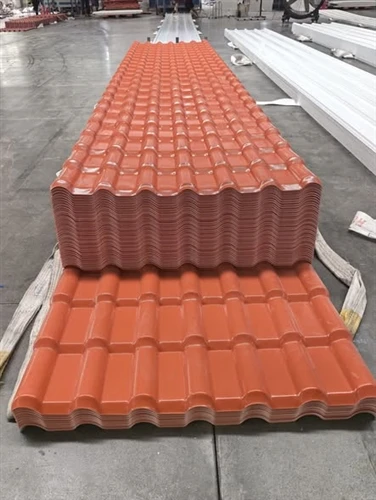
Why Can The Price Of Resin Tiles Vary By As Much As 50%? Here Is Where Your Money Is Actually Going—broken Down Into Five Key Areas.
Nov 27, 2026
Leave a message